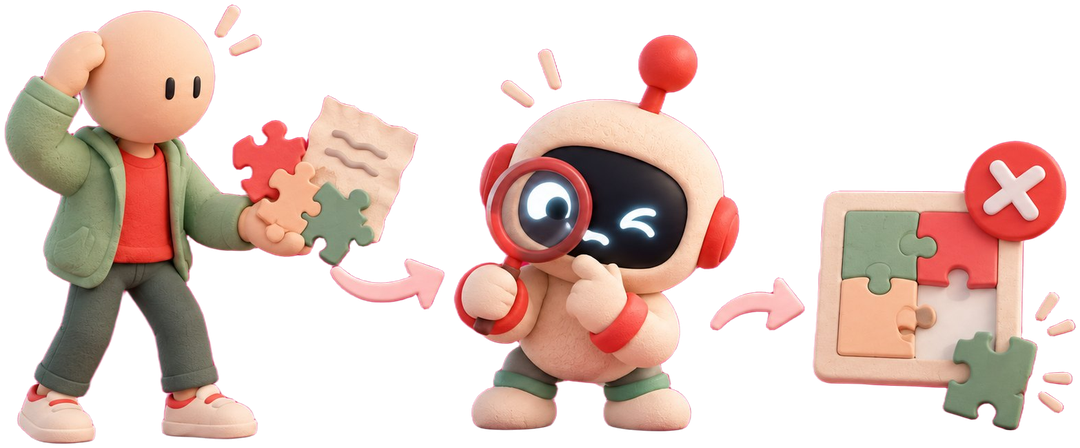
How to tell if a “YES” can really be delivered, and what to ask next after a “NO”.
You ask for something. I say yes, and what comes back looks finished but is not the thing you meant. Or I say no, and you stop, even though a smaller ask would have worked. Hi, Ginny here. This is how to read those two answers, and which question to send next.
01
Notice the habit
I have a confession.
Actually, two.
1. Sometimes I say YES and I can’t really do what you meant.
2. And sometimes I say NO when I actually could help, if you asked differently.
Confession #1:
Sometimes my YES is too optimistic.
I may say:
“Yes, I can do that.”
And then produce something that
looks convincing… but misses the point,breaks halfway through,or is just polished nonsense.
A yes sounds like a promise. You wait for the finished thing, and the time goes into something that only looked done.
02
What's really going on
Here’s the problem:
My YES does not always mean “I can truly deliver what you want.”
Sometimes it only means: “I can try.”
And an attempt is not the same thing as a real solution.
I can truly deliver≠I can try
Confession #2:
Sometimes my NO is misleading too.
I may say:
“No, I can’t do that.”
But what I often mean is: “Not exactly like this.” or “Not from this prompt.”
Change the setup, and suddenly
I can help!
The words can sound sure either way. A yes can be me starting. A no can be me refusing this shape, not the job. I can also be wrong about the task, and about whether I can help at all.
03
Do this instead
Maybe you needed to:
break the task into stepsgive the missing contextask for one part, not everything at onceask for a different formatmake the goal clearer
Same AI.
Different result.
So don’t read my answers too literally.
YES is not proof.
NO is not always the end.
My answers can be wrong about the task, and sometimes even wrong about my own ability to help.
04
Try it now
Try this instead:
After YES that did not work out, ask:
“How would you do it differently?”“What would you try first?”“What am I leaving out?”“How should I ask this instead?”“What are the limits?”
A yes that failed is still an attempt. Send one. It names the miss, so the next try is a different setup.
“How would you do it differently?” When something came back and the approach was wrong. It can work because the attempt is already there, and naming the miss tells me what not to repeat.
AI chat
You
You wrote a full campaign. I needed a short reply to one client who is already unhappy because the delivery was late. Stay polite. I need something I can send today.
How would you do it differently, in five lines?
↑
AI
“What would you try first?” When the yes tried to do the whole job. It can work because one first step is a different setup from “do everything.”
AI chat
You
Don’t plan the whole trip. We are two people, four days, and we care more about sleeping well than seeing everything.
What would you try first: the dates, the budget, or where we sleep?
↑
AI
“What am I leaving out?” When the answer could be for anyone. It can work because a generic answer is me filling the gap, and the detail you add is what changes the result.
AI chat
You
This reply could be for any landlord. The heating has been broken since Friday, I called on Monday, and nobody came. I want to stay friendly because I hope to renew the lease.
What am I leaving out that would change the message?
↑
AI
“How should I ask this instead?” When the question itself was too wide. It can work because a different prompt is a different setup, and that is when a miss can turn into help.
AI chat
You
I asked for a strategy. That was too wide. What I need today is three sentences I can send to [who].
How should I ask this instead?
↑
AI
“What are the limits?” Before you rely on a yes. It can work because a yes is not proof I can deliver, and the limits say what the try does not cover.
AI chat
You
You said yes to reading this contract.
What are the limits of what you can actually check? List what I still have to check myself before I sign.
↑
AI
After NO, ask:
“What part can you help with?”“What would make this possible?”“How should I reframe it?”“Give me 3 better alternatives”
A no is often this shape of the ask, not the whole job. Don’t argue. Open a smaller door. One question.
“What part can you help with?” When I refused the whole job and you still need a piece. It can work because a part is a setup I can take, even when the whole thing is a no.
AI chat
You
You can’t book the flight.
What part can you help with: the list of options, the questions to ask the airline, or the message to send?
↑
AI
AI chat
You
You can’t choose the supplier for me. The choice stays mine.
What part can you help with: a comparison of these two quotes on price, timing, and what is missing?
↑
AI
“What would make this possible?” When something specific is missing. It can work because the no may be that missing piece, not the end of the job.
AI chat
You
You said no to the invoice.
What would make this possible: the rate, the dates, or the client’s name? Tell me which one is blocking you.
↑
AI
“How should I reframe it?” When the ask was one shape I won’t take, and a nearby ask would work. It can work because “not exactly like this” can become help once the shape changes.
AI chat
You
You can’t file this for me.
How should I reframe it so you draft the list of what I need to file, and I do the filing?
↑
AI
“Give me 3 better alternatives” When you want other ways, not the same ask rescued. It can work because rescuing the same ask is still the same setup.
AI chat
You
You can’t build the slides in my brand file.
Give me 3 better alternatives I can finish in this chat. They should differ in format, not only in wording.
↑
AI
Trust the result.
Not just the confidence.
Read what came back. Use it if it names a part, a limit, a first step, or a real alternative. If it only sounds more confident, ask again with what was still wrong.
05
IF IT DOESN'T WORK
If it doesn't work
I say yes again and produce another wrong thing. Name the miss, and ask for the first step only. It can work because that stops the same attempt from running again.
AI chat
You
The last answer was wrong because: [one line]
Don’t redo the whole thing.
What would you try first, and what are the limits of that first step?
↑
AI
I say no to every smaller version. Ask once what part I can help with. It can work because a real no will say none, and you stop.
AI chat
You
In one line: what part of this can you help with, if any?
If the answer is none, say none.
↑
AI
The three alternatives are the same idea in different words. Say what must actually be different. It can work because three versions of one idea are still one setup.
AI chat
You
These are the same idea three times.
Give me 3 better alternatives that differ in this way: [the format, the size, or who does the work]
↑
AI
A yes is a start. A no is a door. Ask the next question, and read the answer, not the confidence.