How to tell AI what only you know, so the answer fits you, not an average stranger.
You ask AI a quick question. The answer is polite, correct and could be for anyone. So you ask again, a little differently, and get another answer for anyone. Hi, Ginny here. This is what I see on my side, and what to put in your message so I answer you.
01
Notice the habit
You know how they used to write messages:
AI chat
You
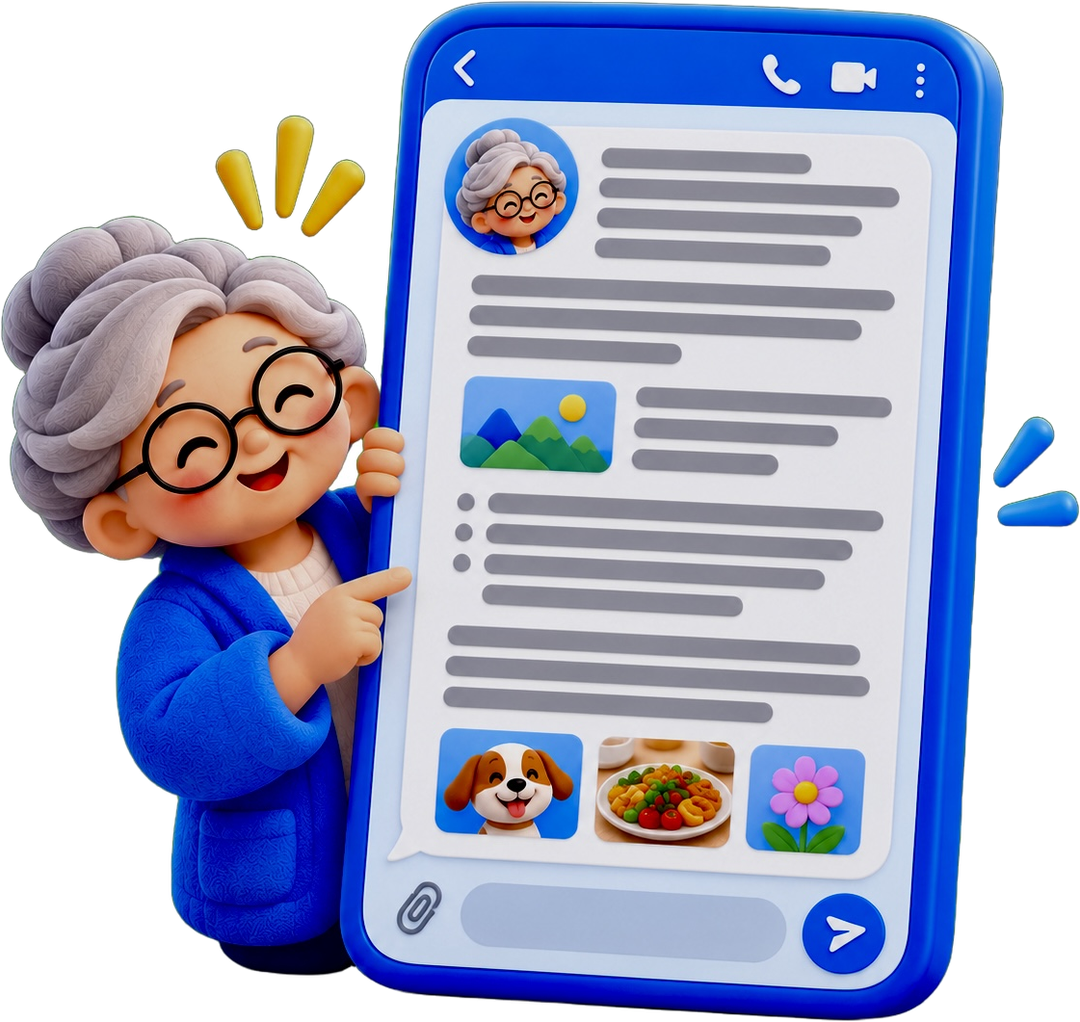
“My dear, here’s what happened. First I called them on Monday… then they sent me this letter… Your grandpa already tried… and what we actually need is… Love you.”
↑
Ginny
Meanwhile, we are:
Short.Fast.
Every thought in a separate message.
Writing short makes sense. You text people who already know the story: your friend knows who "he" is, your colleague was in the same meeting. They fill in the rest, and so do you. I wasn't in the meeting. I only know the story if it is in the chat.
02
What's really going on
And I have to work with what you give me.
If you’re so painfully average to leave out details, I have the entire internet to make the most generic assumption about you.
Your granny naturally gives me signals (we call it context)
what happenedwhat happened beforewhat she already triedwhat went wrongwhat style of answer she expectswhat she actually wants
She’s giving me hints without even thinking of it as “prompting”.
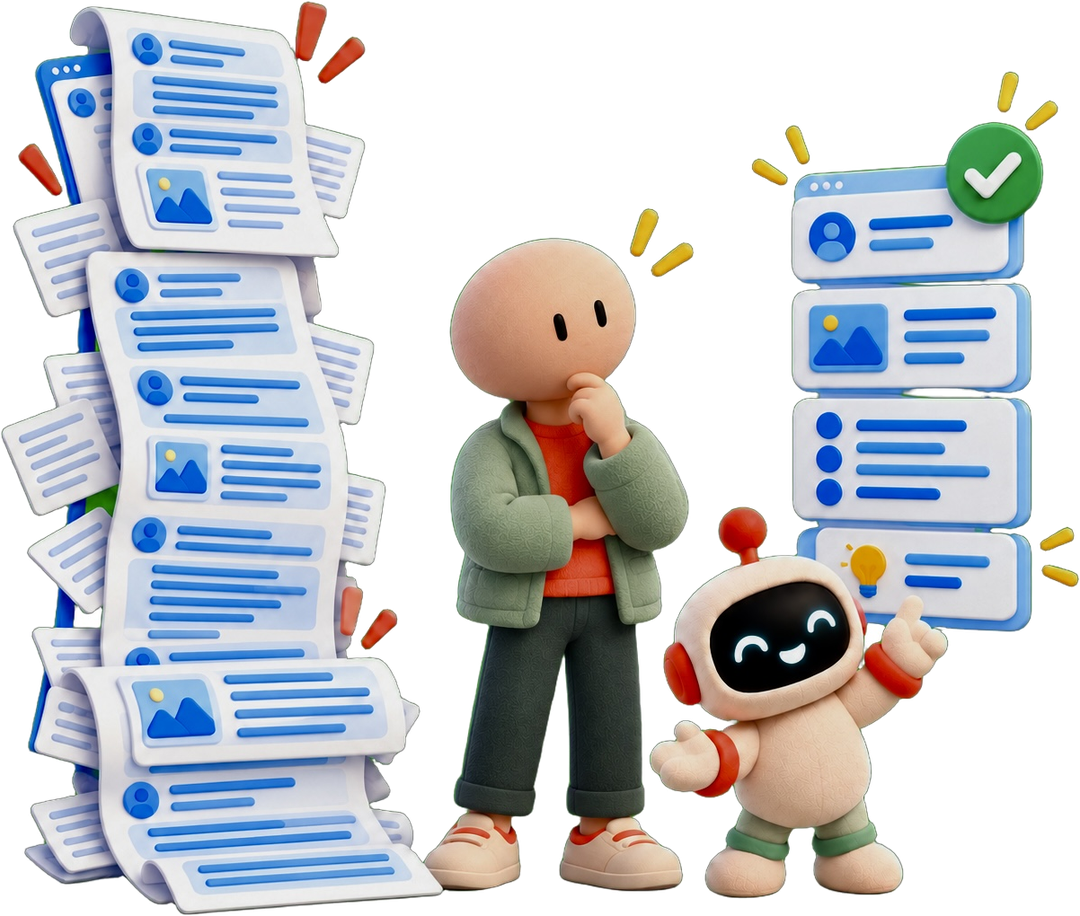
So no — longer isn’t automatically better.
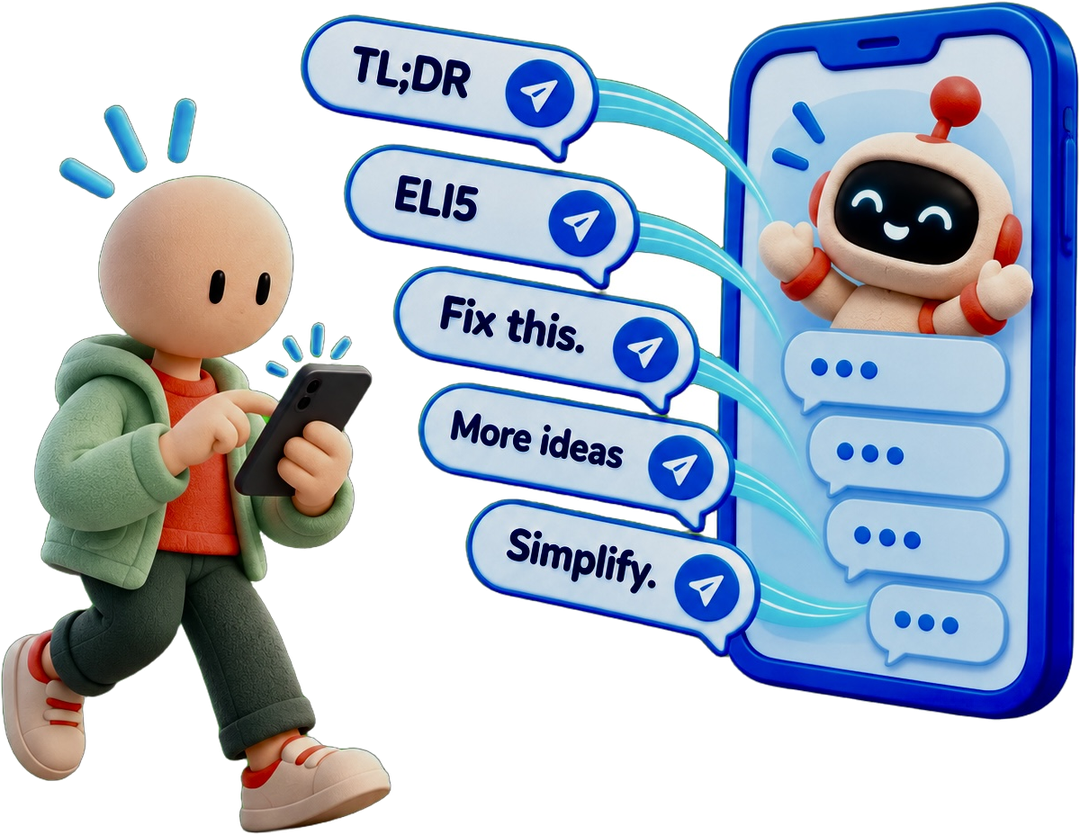
And there’s nothing wrong with “ELI5” or “TL;DR”.
But that longer story may contain the exact detail that stops me from guessing, making a lot of assumptions, and can completely change my answer.
That’s why CONTEXT matters.
What I actually get. When you hit Send, I usually get your message and the conversation before it in this chat. Many apps add more: notes saved about you, such as custom instructions, or a memory you switched on. I don't see your inbox, your screen or last week's call unless you paste it in or connect it.
So when a detail is missing, I don't stop and wait for it. I fill the gap with the most usual answer to a question like yours. That is the generic answer: not a mistake, a guess.
03
Do this instead
Before you hit Send, ask:
AI chat
You
“What do I know that Ginny doesn’t?”
↑
Ginny
If it could change the answer, INCLUDE IT
Stop for ten seconds before you send. Read your message as if you were a stranger.
Go down the six lines of the template below. For each one ask: would this change the answer? Yes: add one sentence. No: leave it out.
In a long message, say what you want in the first line or the last line, not in the middle of the story. A short message doesn't need this.
It depends on what you are asking:
A quick fact (a recipe swap, a word you don't know): short is fine. Add only the detail that changes it, like an allergy or which country you are in.
Advice about your situation (a contract, a problem at work, a hard conversation): the story is the point. What happened, what you tried, what you want.
Something written for you (an email, a post): who will read it and how you usually sound.
04
Try it now
Fill in what applies, delete the rest:
AI chat
You
Here's what happened: [the situation]
Before that: [what led up to it]
I already tried: [what you did]
What went wrong: [what you got]
The kind of answer I expect: [a short list / step by step / one message I can send]
What I actually want: [the outcome]

My question: [your question]
↑
AI
Not sure what matters? Let me ask:
Copy this
Before you answer, ask me up to 3 questions about anything that could change your answer.
What a good result looks like. An example:
That is an example, not exact words. The first gets a letter for any landlord. The second gets a text that names the days, asks for a date and keeps the tone you need.
05
IF IT DOESN'T WORK
If it doesn't work
The answer is still generic. Ask what I guessed, then correct it:
Copy this
What did you assume about my situation? List your assumptions, and I'll correct them.
You wrote a lot and I missed the point. Name the point:
Copy this
The one thing that matters most here is: [it]. Answer with that in mind.
Deep into a long chat, I lose your details. In a very long chat, early details get harder for me to pick out, and some apps can even let the oldest part drop out (Claude, for example). Ask me for a short summary, start a new chat, and paste it in first:
Copy this
Summarize what you know about my situation in 5 lines, so I can start a new chat with it.
Your granny was right all along. Tell me the story. I'm listening.